Tuesday, 11 June 2013

Good and Evil in Art

There are many famous and well known art works all around the world. Most of these art works are very ancient and have a story behind them, or a reason for its creation, mostly for the time period in which it was created, and what influences that time period had on the artist. There are many well known artists that have composed famous art works, one of the most world famous art works, was made by Leonardo Da Vinci, the Mona Lisa. Some other well known and successful paintings are     Adam and Eve by Lucas Cranach the Elder,  Pieta by Michelangelo, Christ of St John of the Cross by Salvador Dali, The Gates of Hell by Rodin, The Condemned in Hell by Luca Signorelli, Christ the King - Orthodox icon, The Temptation of Christ on the Mountain by Duccio and Jesus Trampling down the dead - Orthodox icon. All of these paintings have effects of good and evil and are influenced by either good or evil in ways that the artist painted it. Most of the paintings contain of both good and evil and tell a story. Even if the painting looks happy and bright, it could have the darkest story, and even tho a painting could be dark and gloomy, the story could be something happy. 
Each of the paintings are very different , which makes them so famous and unique. Pieta by Michelangelo is not a painting, but a sculpture. Michelangelo was an Italian sculptor, painter, architect, poet, and engineer of the High Renaissance. This sculpture and many others were created in the time period of the renaissance, and influenced Michelangelo on the development of Western art. Michelangelo sculpted this artwork in  1498–1499 and called it Pieta. This famous work of art depicts the body of Jesus on the lap of his mother Mary, sitting on the rock of Golgotha after the CrucifixionIt is made of marble, and measures 174 cm by 195 cm and is the only work he ever signed. Michelangelo’s sculptor shows the “religious vision of abandonment and a serene face of the son”, as he didn't want his version of it to represent death. His painting represented the connection between man and god, through Christ. The connection between Jesus and Mary is evident in the artwork, it is representing death and life at the same time ( good and evil ) this artworks religion was made to be Christian. as this sculptor represents life and the reincarnation of Christ, it also relates to death, but in a good and bad way. He died but came back to life, he didn't go to heaven or hell, he was always meant by god to come back alive. The sculptures main focus is the connect between Mary and Jesus these two figures are carved so as to appear in a unified composition which forms the shape of a pyramid , In the sculpture  Mary’s body is larger than Christs body, so large that if she stood up she would tower over her son, If her body was made smaller it would be awkward as it would look like an adult on her lap, but Jesus was her son, and she holds him gracefully in the sculpture, just as a mother would.  Michelangelo did this because it represented the connection between Mary and her son, she was mothering him, and it was so she could support her son on her lap. Pieta the sculpture, balances the Renaissance ideals of classical beauty with naturalism, and is one of the most highly finished works of Michelangelo. At the time, Michelangelo’s sculpture of Mary with the dead Christ was a unique addition to Italian sculpture, though there were some painted depictions in Florentine art. In my opinion i think that the theme wasn't very well presented as it is meant to display a sweet tenderness despite the very tragic nature of this scene, the scene creates good and evil at the same time (happy and sad) the sad part of it is the moment when the Virgin is confronted with the reality of the death of her son. 

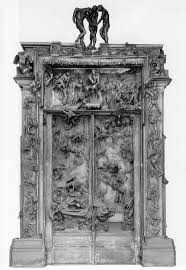
The gates of hell is a sculpture created by Auguste Rodin, the name of it describing the exact meaning  of the sculpture, "The gates of hell", Hell describing evil and the gates representing the welcoming of hell. The sculpture clearly represents evil, as hell is a sign of evil and is ruled by the devil. Evil is represented in this sculpture in many ways, representing the evilness of hell and the gates leading to it. Gates usually represent a welcoming into a place, which is tempting to go in, but it deceives you as hell is evil and a very bad place that no one wants to go. This theme is represented as there are several little sculptures of people sad and helping each other, the gates seem crowed, and full of people that have sinned. It looks as if they are trying to escape from hell, helping each other out and pushing each other up, to get out of hell. At the top of the sculpture there are three humans putting there hands together as if they are in a team. In the sculpture it contains of many little people, forming together as a team, looking like a crowded hell. In my opinion the theme represents both, good and evil. The gates of hell sounds as if it is meant to represent evil, but the people in the sculpture look like they are helping each other. The theme isn't necessarily representing all evil, as despite its name, it represents some good. 

·    Christ of St John of the Cross by Salvador Dali is a painting that creates a very sad and grief mood. This painting is of Jesus dieing on the cross. Jesus is now known as one of the most powerful men to ever walk the earth, and is worshiped by Christians, although, back when Jesus was alive everyone thought he was crazy and didn't believe he was the son of god despite the miracles he performed. There were people who believed in him but there were much more that thought he was an impostor and wanted him dead. The town beat him up, stripped him naked and nailed him to the cross, to die a slow and painful death, but god wanted this to happen in order to show them that he is the real son of god and days after, he came back to life. This event is definitely evil, but the people at the time considered it the right thing. The artist of this painting, painted with feelings and showed the loneliness and sadness of Jesus. The paintings main focus is Jesus, it is painting to make it as if Jesus was floating into heaven, to then be resurrected. The people beside the boat are derived from a picture by Le Nain and from a drawing by Velazquex for The Surrender of Breda. This painting depicts the crucifixion of Christ, and is painted in a unique angle, almost as if it is the angle of gods view. I think the theme has been presented clearly, it shows gods view on the world and on Jesus, raising his son from the dead. It shows sorrow and sadness, but can also relate to something happy as it depicts the new life of Christ.


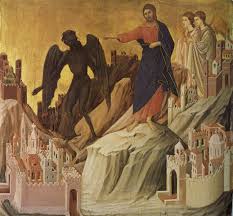
dOne theme that is mainly influenced by artists is evilness. A lot of these paintings have the purpose the represent evil. This one painting displays a symbol of good (Jesus) and Evil (black angel), it is like they are versing each other, but in a peaceful way, because it is called , The Temptation of Christ on the Mountain, because he is tempted to fight the evil, but he knows that, that would be wrong. 

Tuesday, 4 June 2013

Case study, World War 1

Who
There were many countries that fought in WW1; Austria-Hungary, Belgium, Brazil, British Empire, Bulgaria, China, France and Colonies , German Empire ,Greece ,Italy , Japan ,Liberia , Montenegro , Ottoman Empire , Portugal ,Romania ,Russia ,Serbia ,United States of America
What
World war one, was a global war, involving many different countries, with huge losses of life and little ground lost or won. It was originally known as the great war, as they didn’t expect another one, Many hoped that World War I would be "the war to end all wars," but soon to come was world war 2.
When
WW1 went for 5 years and WW2 went for 6 years, both of them leaving an enormous effect on the world today. World war one started in 1914 July 28, and ended in 1919, November 11.  It has been estimated that there were 10 million military deaths and another 20 million wounded. In world war 2 it is estimated to be 40-50 million deaths! Showing that world war one was definitely not the war the end all wars.
Where
It is called a world war because it is fought by many countries, some of these countries teamed up to fight against their opponents. World war one was mostly fought on the continent of Europe, explaining why the poem “Flanders fields” was written, as it is located in France. This poem describes the horrific memories of the war and how the poppies grown there, represents each soldiers death.
Why
The first spark that started world war one was the assassination of Archduke Franz Ferdinand and his wife Sophie. But this definitely isn’t the only reason for the start of world war 1, there are many. The murder of Archduke Franz Ferdinand, formed an attack between Austria-Hungary and Siberia, yet they had many countries as there treaties. Many other countries started to join as other countries treaties, and created an enormous war. Australia also fought in this as they were federated!
 
All up there were 2 great wars, they both changed the world and affected it hugely. World war 1 was known to be the war that ends all wars, as at the time the people were shocked and thought there couldn't ever be another war as big. For Australia, as for many nations, the First World War remains the most costly conflict in terms of deaths and casualties, and is still known as one of the biggest wars, and is remembered by many people as we take time to remember those who fought for our country on the 24th of April. All these countries involved were treaties of the original countries that started the war, Australia fought because they finally felt like a country, being federated thirteen years before. Flanders fields is a very sad poem that was written by John McCrae, he wrote this poem after his best friend died in the war, the poem has alot of feeling to it and sad gloomy emotions, displaying how brave the soldiers that fought in the war were, and that we will never forget them, in Flanders Fields is where the countries fought. 

In Flanders fields the poppies blow
Between the crosses, row on row,
That mark our place; and in the sky
The larks, still bravely singing, fly
Scarce heard amid the guns below.

We are the Dead. Short days ago
We lived, felt dawn, saw sunset glow,
Loved and were loved, and now we lie,
In Flanders fields.

Take up our quarrel with the foe:
To you from failing hands we throw
The torch; be yours to hold it high.
If ye break faith with us who die
We shall not sleep, though poppies grow
In Flanders fields. 
 
There were endless deaths resulting in heart broken families and destroyed countries, the number of people that died in the war is an enormous number of people, if you really think about it, it is like killing half of Australia, now that is way to many people. We will always remember them and how brave they really were.

There were numerous reasons for world war one, many people could see it coming, but they didn't expect world war two. Britain owned a quarter of the world which gave them many countries to team up with, another issue that caused much friction between Britain and Germany was Germany's desire to increase the size of its navy. Britain concluded that Germany's desire to increase the size of her navy was to threaten Britain's naval might in the North Sea. The British government concluded that as an island we needed a large navy and they could not accept any challenges from Germany. This great war had many affects, one of them was the right of women. This war had important social consequences. There was progress in the sphere of women.When all the men were at war the women were at home doing the work the men would normally do, as the war went on it was discovered that women were just as powerful as men, and got the right to vote later on. The main reason for the conflict between Austria-Hungary and Siberia was because of the assassination of Arch Duke Franz Ferdinand and his wife Sophie, although there were many other reasons and arguments going on at the time, this murder really sparked the start of the war. After the Great War, the prices of articles went up. Starvation stalked the world. The government restricted the price of the commodities. Huge taxes were imposed on people. Many mills and factories were established. The workers launched movements for the recognition of their rights. The countries that fought in the war were so horrified and helpless after the war ended, there was no hope for there path of progress.


 France and Germany are so close together on the map, and might have made a few boundaries to makes sure each country stays away from each other. France actually gained part of the German African territories, Germany fought on the french grounds, they suffered a high loss of life, and destroyed industrial region and economic devastation. Germany weakened due to loss of world war one, it lost its overseas territories, and some owned by France.     
Timeline Of World War One: 
 
1914


June 28th
Francis Ferdinand assassinated at Sarajevo

July 5th
Kaiser William II promised German support for Austria against Serbia

July 28th
Austria declared war on Serbia

August 1st
Germany declared war on Russia

August 3rd
Germany declared war on France and invaded Belgium. Germany had to implement the Schlieffen Plan.

August 4th
Britain declared war on Germany

August 23rd
The BEF started its retreat from Mons. Germany invaded France.

August 26th
Russian army defeated at Tannenburg and MasurianLakes.

September 6th

October 18th
First Battle of Ypres

October 29th
Turkey entered the war on Germany’s side. Trenchwarfare started to dominate the Western Front.


1915


January 19th
The first Zeppelin raid on Britain took place

February 19th
Britain bombarded Turkish forts in the Dardanelles

April 25th
Allied troops landed in Gallipoli

May 7th
The “Lusitania” was sunk by a German U-boat

May 23rd
Italy declared war on Germany and Austria

August 5th
The Germans captured Warsaw from the Russians
 September 25th Start of the Battle of Loos

December 19th
The Allies started the evacuation of Gallipoli


1916


January 27th
Conscription introduced in Britain

February 21st
Start of the Battle of Verdun

April 29th
British forces surrendered to Turkish forces at Kut in Mesopotamia

May 31st
 June 4thStart of the Brusilov Offensive

July 1st
Start of the Battle of the Somme
 August 10thEnd of the Brusilov Offensive

September 15th
First use en masse of tanks at the Somme

December 7th
Lloyd George becomes British Prime Minister


1917


February 1st
Germany’s unrestricted submarine warfare campaign started

April 6th
USA declared war on Germany

April 16th
France launched an unsuccessful offensive on the Western Front

July 31st
Start of the Third Battle at Ypres

October 24th
Battle of Caporetto – the Italian Army was heavily defeated

November 6th
Britain launched a major offensive on the Western Front

November 20th
British tanks won a victory at Cambrai

December 5th
Armistice between Germany and Russia signed

December 9th
Britain captured Jerusalem from the Turks


1918


March 3rd
The Treaty of Brest-Litovsk was signed between Russia and Germany.

March 21st
Germany broke through on the Somme

March 29th
Marshall Foch was appointed Allied Commander on the Western Front

April 9th
Germany started an offensive in Flanders

July 15th
Second Battle of the Marne started. The start of the collapse of the German army

August 8th
The advance of the Allies was successful

September 19th
Turkish forces collapsed at Megiddo

October 4th
Germany asked the Allies for an armistice

October 29th
Germany’s navy mutinied

October 30th
Turkey made peace

November 3rd
Austria made peace

November 9th
Kaiser William II abdicated

November  11th
Germany signed an armistice with the Allies – the official date of the end of World War One.


Post-war – 1919


January 4th
Peace conference met at Paris

June 21st
The surrendered German naval fleet at Scapa Flow was scuttled.

June 28th
The Treaty of Versailles was signed by the Germans.


Through out World War One, it was a tough time, many innocent soldiers died sacrificing there lives for our benefit. The bravery and courage of the young men was tremendous, they helped each other, cared for other not only themselves, they fought for us, and helped benefit our lives today, making sure we live in a good place. Not only did these young soldiers fight for 4 years straight, they had to live with the horrific memories throughout there life, many of there good friends died, and they watched some of the worst things. Many of these men had talents and some lived and fulfilled them and some died. For example Wilfred Owen, he was a very talented poet, and dreamed to write poetry since he was little. During the war he recorded the events that happened and made a few poems, that explain the war in a very bad, monstrous way. Sadly he died during the war, but after wards, got very famous for his amazing poetry! This is one of his poems called doomed youth, basically the title says it all, the young men that fought in this war were doomed, they had a future to look forward to and the war doomed it, they will always live with the memories of the war. Wilfred Owen was definitely not happy about these doomed futures, he was not happy about the deaths that didn't get recognized. This poem strongly describes his hate for the war: 

ANTHEM1 FOR DOOMED YOUTH
A
    What passing-bells2 for these who die as cattle? 
    Only the monstrous anger of the guns. 
    Only the stuttering rifles' rapid rattle 
    Can patter out3 their hasty orisons.4
    No mockeries5 now for them; no prayers nor bells; 
    Nor any voice of mourning save the choirs, –
    The shrill, dementedchoirs of wailing shells; 
    And bugles7 calling for them from sad shires.8
    What candles9 may be held to speed them all? 
    Not in the hands of boys but in their eyes 
    Shall shine the holy glimmers of goodbyes. 
    The pallor10 of girls' brows shall be their pall; 
    Their flowers the tenderness of patient minds, 
    And each slow dusk11 a drawing-down of blinds.12